
📈 Chasing Alpha Weekly
The NASDAQ dropped 4.5% in a day. Here's why.

📈 Chasing Alpha Weekly — June 6
The NASDAQ dropped 4.5% in a day. Everyone blamed oil. Everyone was wrong. Here’s what actually happened — and why next week is going to be even more volatile.
Chasing Alpha Weekly drops every Sunday. I break down the macro signals, sector rotations, and specific trade setups I’m watching for the week ahead. If you’re new here — subscribe below so you don’t miss it.
The NASDAQ just had its biggest single-day drop since April 2025. $SPY was down 2.5%. $MU, $SNDK, and $TSLA got destroyed. Space names are down 20% off their highs.
And the loudest voices on financial Twitter spent the weekend blaming oil.
Oil was down on Friday.
There was one specific catalyst. It hit at exactly 11:00am. And if you understand what it was, you know exactly how to position yourself heading into what is going to be one of the most volatile weeks of the year.
Let’s get into it.
What Happened Last Week
↑ Winners
Non-farm payrolls came in strong
Short-term put trades on $TSLA and $NDX — systematic selling created clean setups
$STRL and select infrastructure names holding breakouts
→ Watch
$SPY closed under its 12 and 22-day moving average for the first time since April 7th
$NDX same — this is a complete change in behavior, not a blip
Passive index rebalancing mechanics now forcing $15-30B in SpaceX buying whether funds want it or not
↓ Laggards
$MU, $SNDK, $TSLA, $ARM — all used as retail cash sources
$RKLB, $ASTS — down 20%+ off highs and the real pain hasn’t started yet
$QQQ — closed under key levels on institutional volume on a Friday
The market did not break because of oil. It did not break because of the bond market. Here is exactly what broke it.
The 11:00am Headline That Nobody Connected
At exactly 11:00am on Friday, a single headline crossed the tape.
SpaceX IPO said to draw more orders than shares available.
Most people read that and thought it was bullish. Experienced traders read it and immediately understood what it meant.
When a major deal has to announce it’s oversubscribed, it usually means it’s struggling. CBRE was 20x oversubscribed and became one of the single greatest shorts of 2026. Every big institutional deal is 10x oversubscribed as a matter of course. You don’t put out a press release about it.
Here is what the tape actually said:
30% of the IPO is going to retail — an astronomical amount for a deal this size
Robinhood dropped the minimum account size requirement so anyone can participate
Institutions had to hold back 10-15% for friends and family because there wasn’t enough institutional demand
Elon is doing a road show pitching 2040 projections to justify the valuation
The street doesn’t want this deal. And they’re being forced to take it anyway.
From 11:00am on, every single rally was sold immediately. That is not retail panic. That is institutional distribution. Programmed, systematic, 45-degree selling. You can see it on the $TSLA chart like a channel. That does not happen by accident.
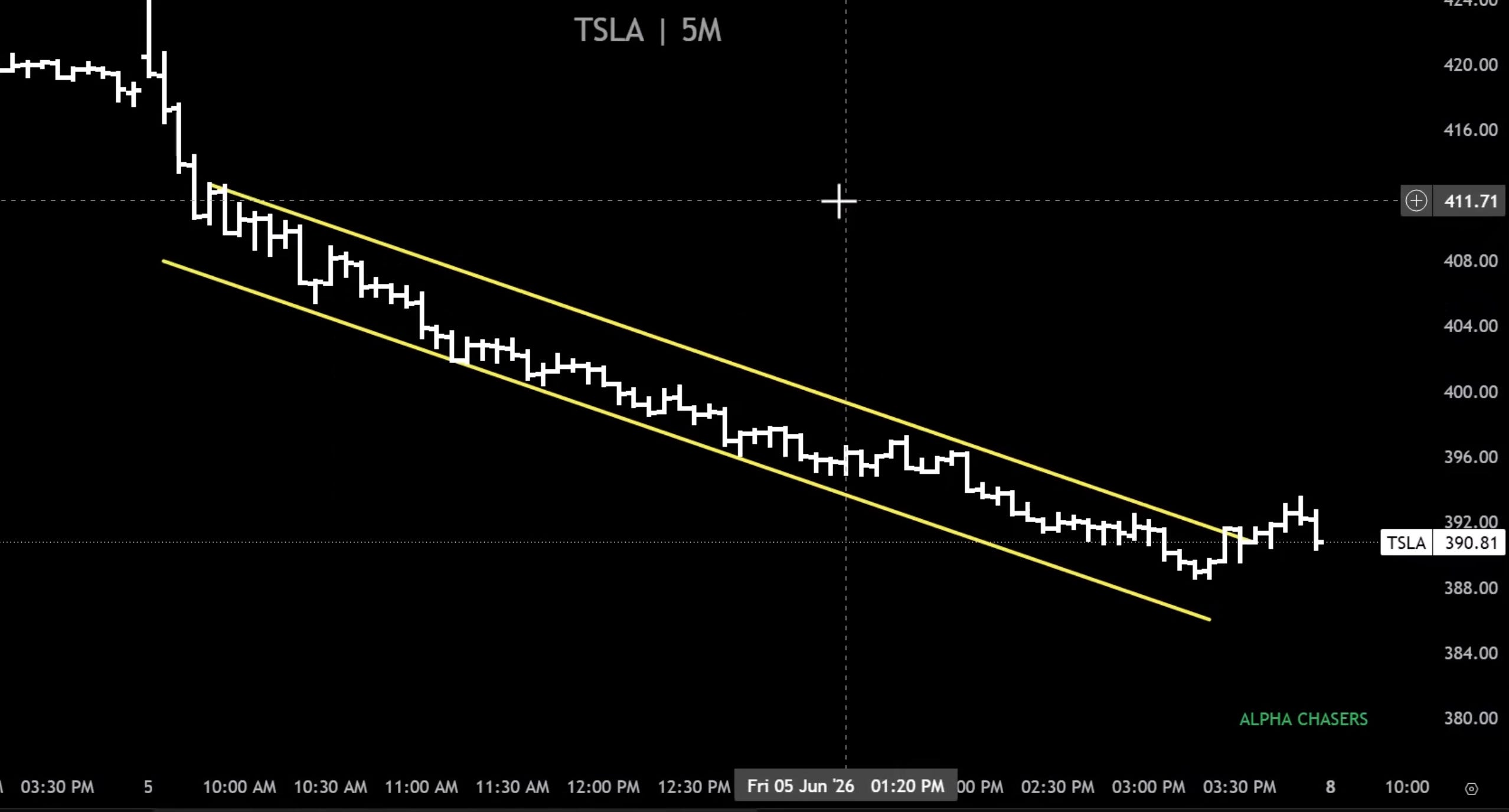
The market dropped the moment institutions understood that retail was about to liquidate their best performers to fund the SpaceX trade. They front-ran every single one of them.
Enjoying this so far? Chasing Alpha Weekly goes out every Sunday. Subscribe below so you never miss a week.
The SpaceX Valuation Problem Nobody Is Talking About
Let me walk you through the numbers because I think most people are not looking at this clearly.
SpaceX’s actual organic revenue growth in 2025, excluding the XAI acquisition, was 9%. Not 44-60% like the analysts are projecting. Nine percent.
The reason the revenue numbers look explosive is because they acquired XAI — a company losing $6 billion annually — and paid roughly $400 billion for it. So for every dollar of XAI revenue, they’re spending two. And they’re calling it a merger.
The valuation trajectory tells the whole story:
July 2025 secondary sale: $400 billion
December 2025: repriced to $800 billion because “it’s an AI company now”
February 2026: merged with XAI, adding $400 billion more
June 2026 IPO: valued at over $1.8 trillion
What happened between February and June 2026 to add another $500 billion in value? The answer is glossy S1 photos and a road show.
At the IPO price, SpaceX is trading at 65 times revenue. The analyst bull case requires them to 6x revenue almost immediately after going public. The bear case is that they’re a rocket company growing at 9% organically with a money-losing AI acquisition attached to it.
Institutions have done this math. That’s why they don’t want it.
The Mechanics of What Happens Next
Here is the part that makes next week genuinely dangerous.
SpaceX is being force-fed into passive index funds whether those funds want it or not. The NASDAQ changed its rules specifically to allow fast-entry inclusion. Passive QQQ funds must mechanically buy whatever price SpaceX trades at on rebalance day. There is no choice.
The estimated forced buying across all index trackers is $15-30 billion.
That money has to come from somewhere. And retail is going to provide it by selling their biggest winners. The names with the highest retail net flows over the past month are the names getting hit hardest. $MU was up 100% from May 1st to its peak. $TSLA. $SNDK. $ARM. These are not selling on fundamentals. They are ATMs.
Here is the timeline you need to know:
June 12 — SpaceX lists
June 15 — Enters buyback blackout window
June 16 — SpaceX options begin trading
June 18 — Regulatory expiration, ETF listings, S&P TMI inclusion
June 26 — MSCI inclusion
June 30 — Month and quarter end rebalancing
July 6 — NDX inclusion
Every one of these dates is a potential liquidity event. And retail still hasn’t sold everything they’re going to sell.
This is day one. Not one day.
The 5 Setups I’m Watching This Week
📌 $QQQ — Stay Out of the Way Until It Settles
Closed under the 12 and 22-day for the first time since this rally began — this is a change in character
Institutions don’t reverse course on a Monday after Friday selling like this — they follow a process
Next meaningful support is the 55-day — a move there would not be surprising
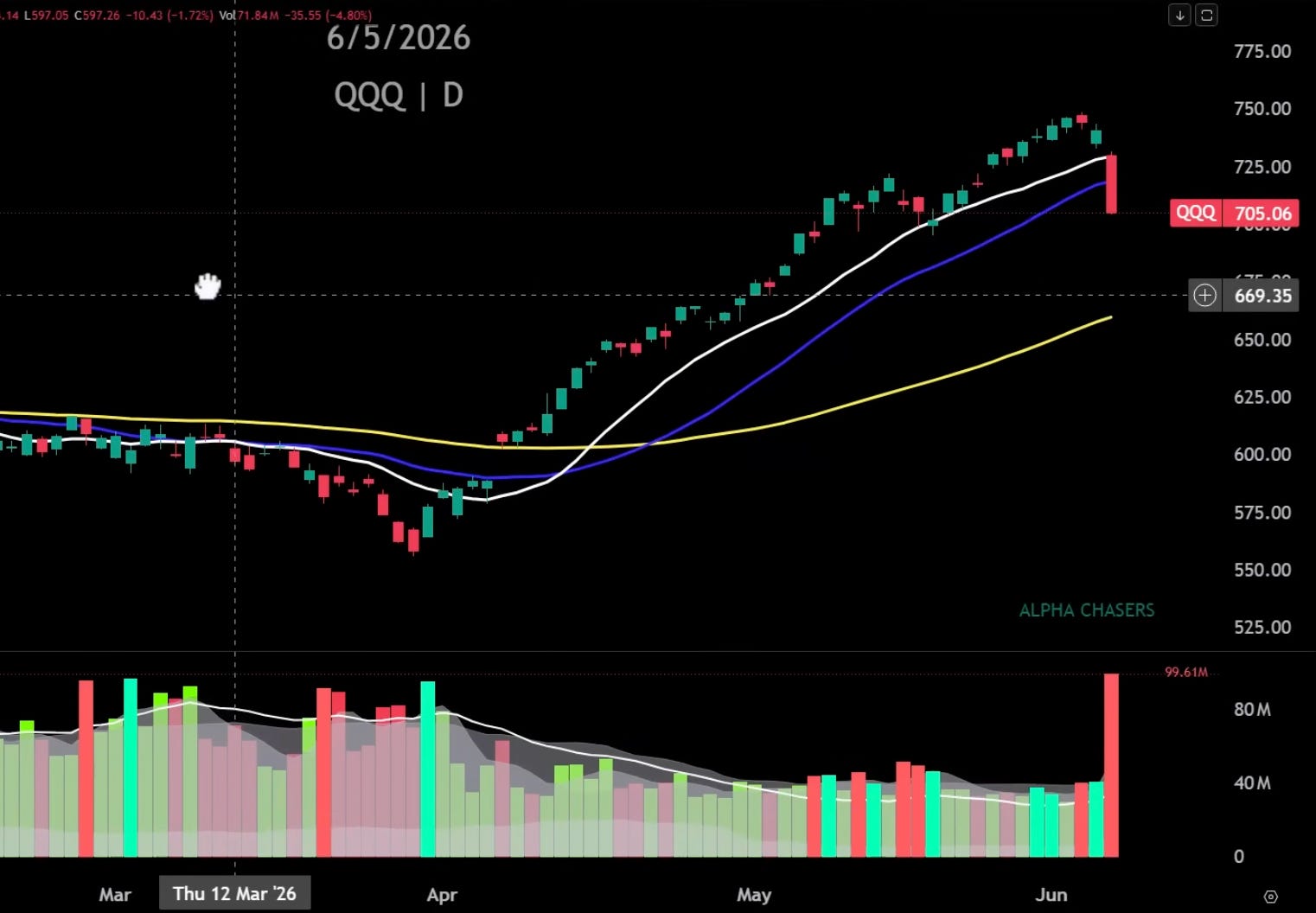
When you open at the high and close at the low breaking critical levels on a Friday, the right move is to get out of the house and look at it from the outside. I’m not re-entering until this settles. My bias is net short on intermediate trades until the SpaceX overhang clears.
📌 $MU / $SNDK — Fundamental Story Intact, Timing Is Everything
Nothing changed on the earnings front — not one number, not one data point
This is pure retail liquidation to fund SpaceX — the source of funds trade
Need to hold the 22-day or the next stop is materially lower
I still believe in this thesis long-term. The DRAM cycle is intact. The CPU demand story is intact. But being right on fundamentals and being right on timing are two different things. I’m not stepping in front of this until the SpaceX overhang clears.
📌 $TSLA — Being Used as an ATM
Selling on Friday was 45-degree, programmed, systematic — textbook institutional distribution
Retail is selling $TSLA to fund SpaceX because it made them money and they expect SpaceX to do the same
The correlation between $TSLA selling and SpaceX excitement is not a coincidence
There may be short-term put opportunities on bounces. But the bigger point is understanding why it’s selling so you don’t mistake a liquidity event for a fundamental breakdown. It will stabilize when the SpaceX funding trade is done.
📌 $RKLB / $ASTS — The Most Dangerous Names Heading Into Next Week
Both are trading at higher valuations relative to SpaceX — that math does not work
If institutions think SpaceX is overvalued at 65x revenue, they definitely think these are
Already down 20% off highs and the IPO hasn’t even listed yet
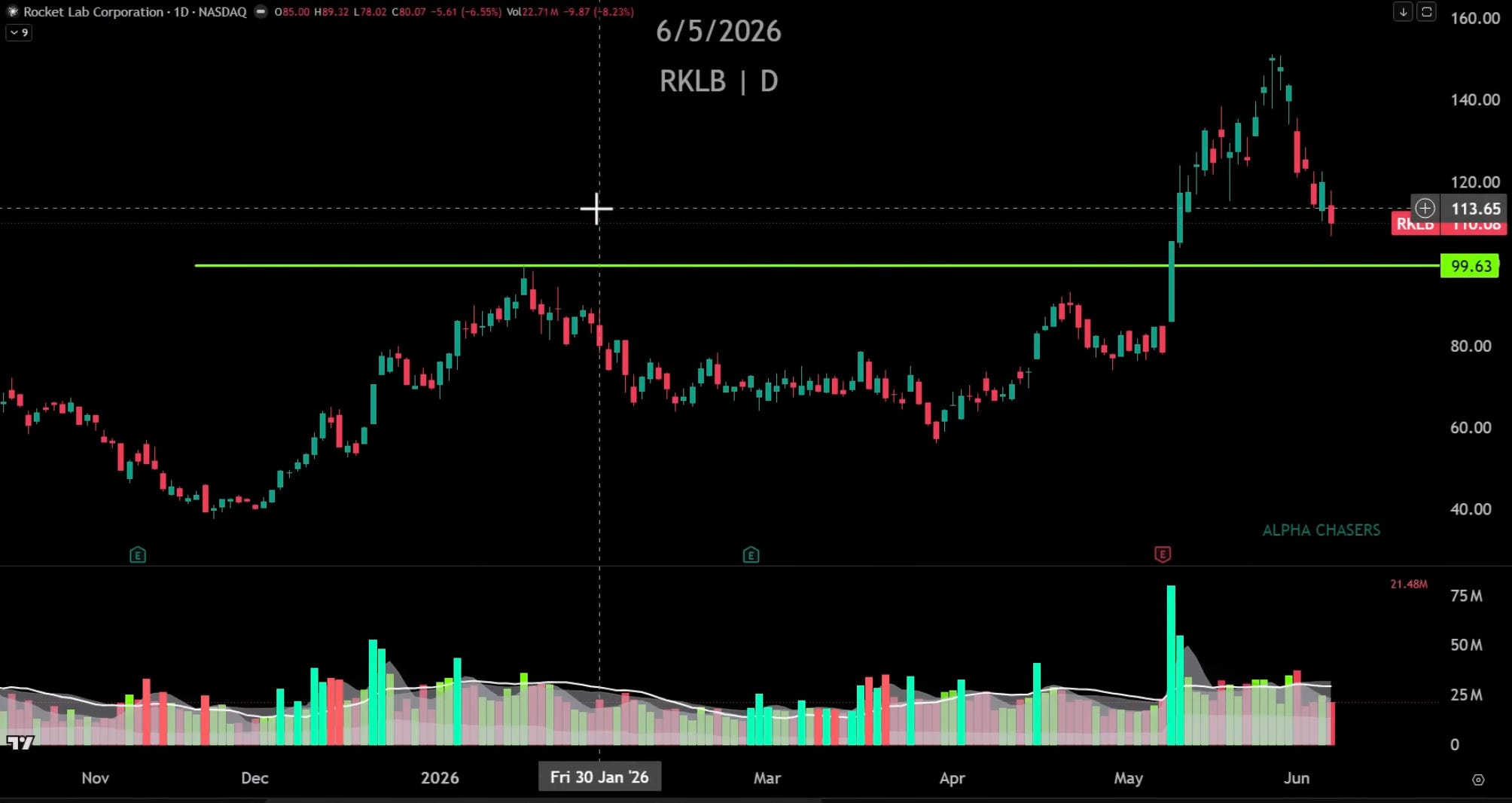
When the mother ship is expensive, the derivatives get destroyed. The retail excitement around these names will not survive a direct comparison to SpaceX’s actual listing price and actual financials. These are the names I’d be most cautious about.
📌 $ARM — Needs to Rebuild Before Re-Entry
Hit the 12-day on Friday — not catastrophic, but needs time
Being used as a cash source despite the Nvidia CPU partnership thesis being completely intact
A move to the 22-day at $284 would be a healthy reset and a potential re-entry point
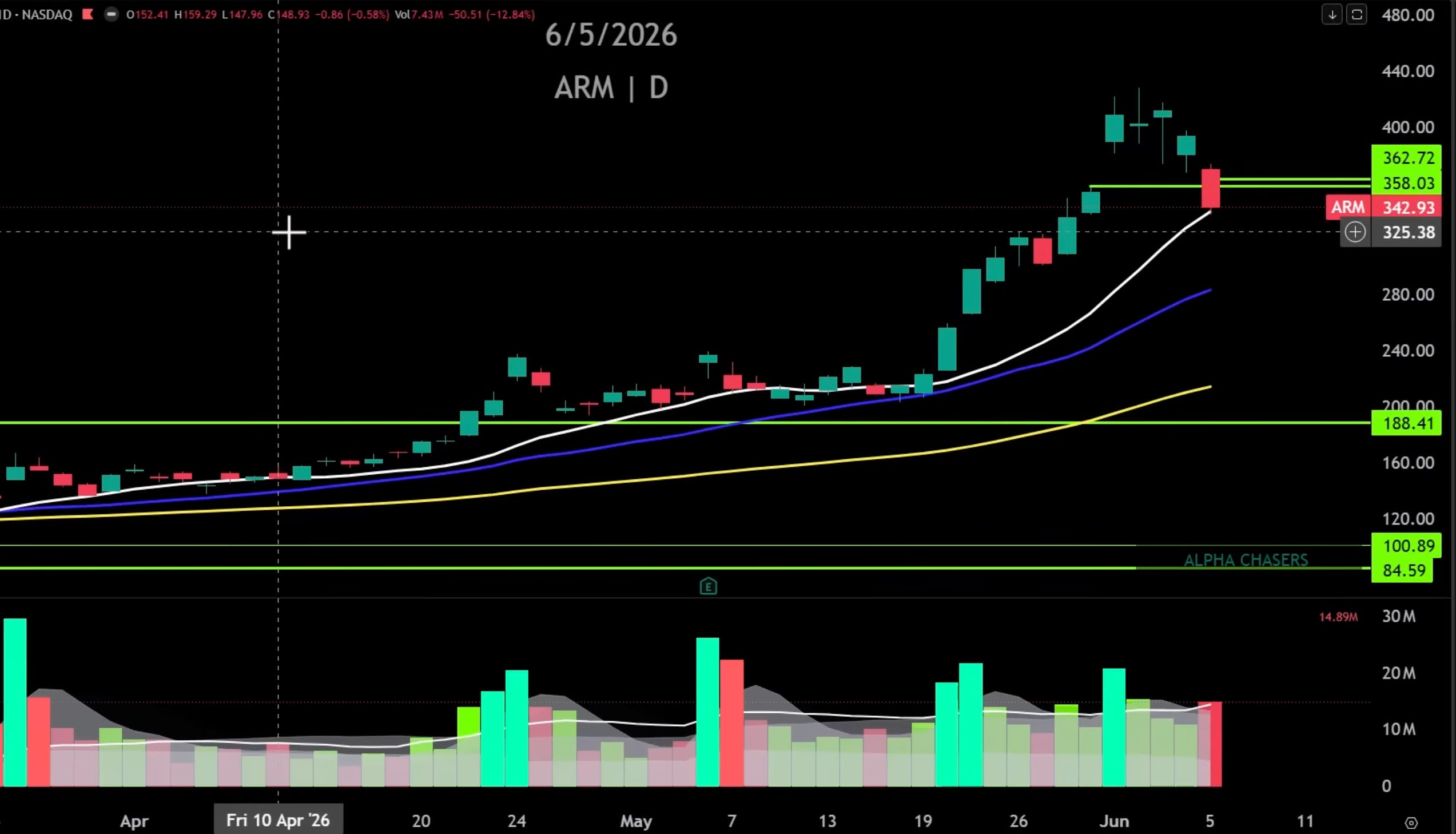
Nothing changed about why $ARM matters. Nvidia is still calling itself a CPU company. The partnership is still intact. The earnings thesis is still building. This is a gift if it gets to the 22-day and holds.
What I’m Watching This Week
SpaceX Listing — June 12
Watch how it opens and whether institutional buyers actually show up. If it gaps up and fades, that tells you everything.
SpaceX Options — June 16
This is when it gets really interesting. Options on a highly shorted, retail-heavy name with forced index buying creates setups in both directions.
$MU / $SNDK — The 22-Day
This is the line. Bulls in charge above it. If it loses it, the next level of support is significantly lower and the selling accelerates.
Month and Quarter End — June 30
Forced rebalancing on top of the SpaceX inclusion mechanics. This is the date where passive funds have the least flexibility. Watch for outsized moves.
The Bottom Line
The NASDAQ didn’t break because of oil. It didn’t break because of the bond market. It broke because retail is liquidating their best performers to fund an IPO that institutions largely don’t want — and institutions front-ran every single one of those liquidations.
The fundamental story in semis, hardware, and AI infrastructure has not changed. Not one earnings number. Not one data point. This is a liquidity event layered on top of a forced index inclusion mechanics story.
But liquidity events don’t care about fundamentals in the short term. And this one has three more weeks of catalysts ahead of it.
Stay out of the way. Let it burn. And when the SpaceX overhang clears and the forced selling is done — that is when you step back in with size.
The full breakdown — including the order flow analysis, the SpaceX valuation teardown, and exactly how I traded the $TSLA puts on Friday — is on YouTube now.